
What is Disciplinary Literacy?
Disciplinary literacy is a set of words and ways with words that are shaped by the practices of the discipline.
Disciplinary literacy is vocabulary. It is sentence structure. It is semantics specific to each discipline—science, mathematics, history, and so on. Disciplinary literacy is also how we think in each discipline, how we ask questions, and then try to answer through language.
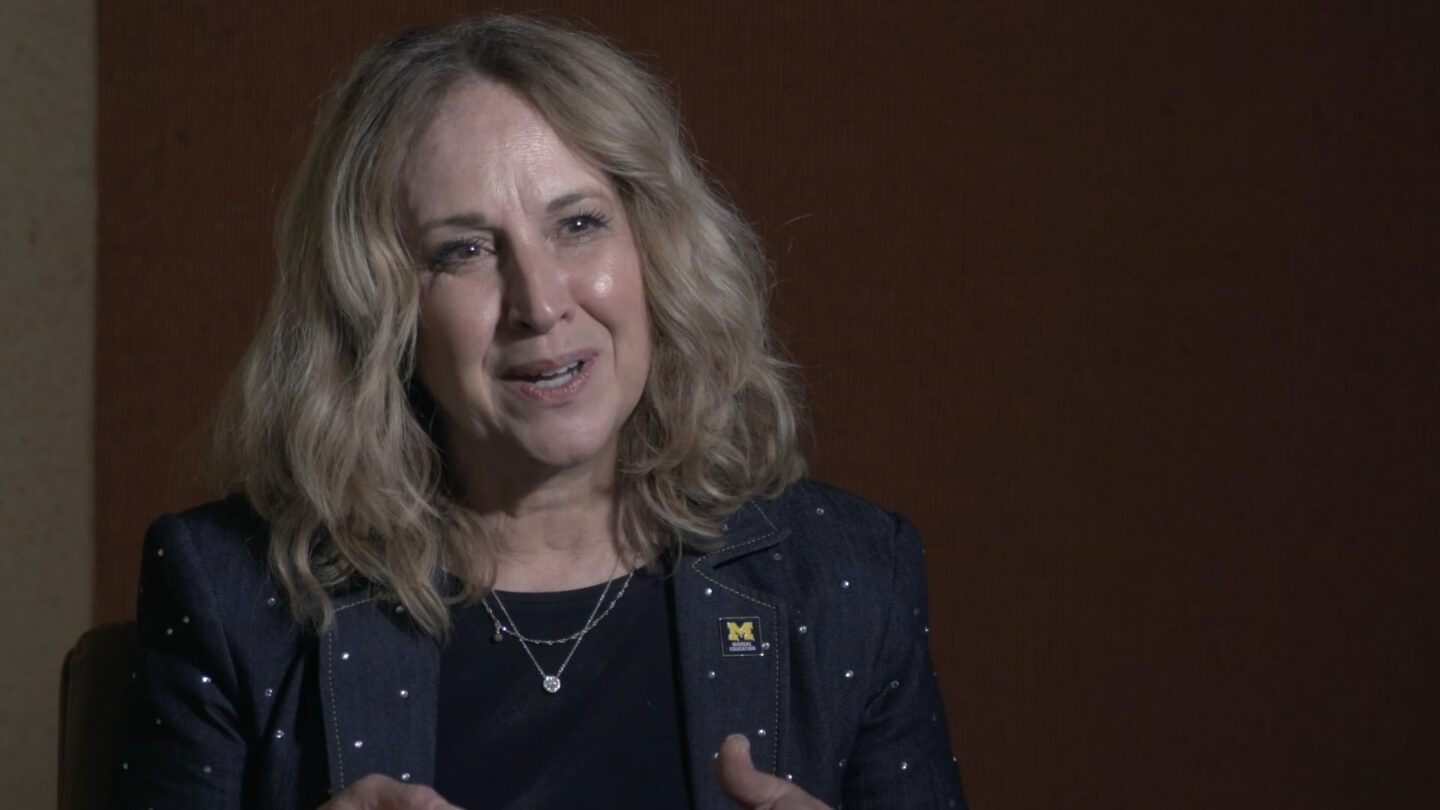
Disciplinary Literacy and Student-Centered Assessment
When we say we want to help students think like mathematicians, scientists, artists, and social scientists, we draw from research to implement practices that equip students to understand and use the specialized vocabulary, communication practices, and tools embedded in the disciplines. And when we want to know what students understand, know, and can do to develop that disciplinary literacy, we use strategies and practices embedded in a student-centered approach to assessment.

The Michigan Assessment Consortium (MAC) is committed to helping educators leverage assessment to achieve equitable access and outcomes for all students. For that reason, MAC’s Assessment Learning Network (ALN) teamed up with Michigan’s Disciplinary Literacy Task Force* to explore how the Components of an Equitable Assessment System support the development of disciplinary literacy, expressed in Essential Practices for Disciplinary Literacy Instruction in the Secondary Classroom.
* An initiative of the Michigan Association of Intermediate School Administrators (MAISA), General Education Leadership Network (GELN)
Foundational Documents
- Components of an Equitable Assessment System (2024) MAC
- Assessment Literacy Standards (2024) MAC
- Essential Instruction Practices for Disciplinary Literacy in the Secondary Classroom (2023) Disciplinary Literacy Task Force, MAISA GELN
- Essential Instructional Practices for Disciplinary Literacy: Beyond “the Core” (2025) Disciplinary Literacy Task Force, MAISA GELN
- Grades 6 to 12 Disciplinary Literacy Resources
webpage by the MAISA GELN
Creating Coherence in Secondary Classrooms
Two full seasons of the Assessment Learning Network (ALN) focused on disciplinary literacy and components of equitable assessment systems. Participants examined the specialized vocabularies, communication practices, and assessment methods that shape the disciplines of English language arts (ELA), mathematics, social studies, science, and the arts. Two additional sessions featured participant stories about the way they were implementing their learning in their classrooms and schools. The archived video and resources resulting from that two-year collaboration are available below.
Note: Most presentation videos listed below are password protected and available only to ALN participants. Password reminders and requests for access should be make to admin@michiganassessmentconsortium.org.

Overview
Disciplinary Literacy and Student-Centered Assessment: A Perfect Combination
Elizabeth Birr Moje, well known for her work in disciplinary literacy, sets the stage for this series by explaining when students learn the literacy particular to each discipline, they gain access to advanced learning opportunities. In this way disciplinary literacy can be understood as an issue of social justice. Dr. Moji was joined by MAC consultants and disciplinary literacy leaders from the General Education Leadership Network (GELN) for supplementary presentations and dialogue.
resources
- Article: Doing and Teaching Disciplinary
Literacy with Adolescent Learners:
A Social and Cultural Enterprise - Article: But What Does It Look Like?
Illustrations of Disciplinary Literacy
Teaching in Two Content Areas - Key Assessment Terms
Videos
Presentation video (password required)
Learning Moments (featuring Dr. Moji)

ELA
Disciplinary Literacy and Student-Centered Assessment in the Secondary English Language Arts Classroom
This session with Dr. Christina Ponzio explored the disciplinary literacy of English language arts and featured examples that engage students in authentic purposes for reading, writing, speaking/listening, and viewing. Participants explored what it might look like to apprentice students into the types of thinking, problem-solving, and communicating that are valued in fields such as journalism, communications, and publishing. The session also explored the assessment practices that intentionally support students as they are apprenticed into ways of thinking and communicating valued in English language arts classrooms.

Mathematics
Disciplinary Literacy and Student-Centered Assessment in the Secondary Mathematics Classroom
This session with Pam Harris explored the disciplinary literacies of mathematics and will feature examples that engage students in:
- problem solving;
- drawing connections between mathematical ideas;
- communication techniques used by
- mathematicians; and reasoning, proof, and representations of mathematical ideas.
The session also explored the assessment practices that intentionally support students as they are apprenticed into ways of thinking and communicating valued in mathematics classrooms.
Resources
- Website: Math is Figureoutable
- Guide: Strategies needed to build powerful numeracy
- Book: Developing Mathematical Reasoning: Avoiding the Trap of Algorithms
- Learning Point: Disciplinary literacy in mathematics and the need to develop mathematical reasoning
Videos
Presentation Video (password required)
Learning Moments (featuring Pam Harris)

Arts
Moving through life and learning: Disciplinary literacy in the arts
Art is a record of human experience as well as a cultural commentary of the time in which it is made. As a form of instruction, the arts guide us to better understand and express ourselves, engage with others, and examine complex ideas. Arts disciplines draw from multiple vocabularies found in and across many fields as well as clearly defined, technical language which codifies art forms. This interactive session with Heather Vaughan-Southard, Ellen Vorenkamp, and Jenelle Williams introduced the arts as a form of inquiry, leading to deepened disciplinary understanding, critical and creative thinking, and refined inter- and intrapersonal relationships while focusing on how artists communicate.
Resources
- Coming soon
Videos
Learning Moments
- What is the role of curricular materials and equitable assessment practices in the arts disciplines? (Ellen Vorenkamp)
- Why are art courses necessary now more than ever? (Heather Vaughan-Southard)
- What are the unique ways of using language/literacy in the arts disciplines and related professions? (Jenelle Williams)

Science
Apprenticeship into secondary science: Science and engineering practices and crosscutting concepts as literacy and assessment tools
This session with Mary Starr explored how secondary students’ experiences in science learning have shifted over the last 15 years and how those shifts can be seen through the lens of disciplinary literacy (DL) in which the practices and crosscutting concepts define how students are apprenticed into science as a discipline and science learning. The session we will explored DL as supportive of the use of the science and engineering practices and crosscutting concepts for students. Using an example of high-quality instructional materials to see the breadth of DL in science learning and assessment, participants then discussed how DL and assessment could expand even further by more completely elevating the crosscutting concepts.
Resources
- Learning Point: Disciplinary literacy and student-centered assessment in the secondary science classroom
- Learning Point: What Impact Will Next Generation Science Standards Have on Assessment?
- Learning Point: What are Next Generation Science Standards?
Videos
Presentation Video (password required)
Learning Moment videos (featuring Mary Starr)
Social Studies
Disciplinary literacy and student-centered assessment in the secondary social studies classroom
This session with Darin Stockdill examined disciplinary literacy in history and other social studies subjects, highlighting the importance of problem framing and inquiry to establish an authentic purpose for reading, writing, speaking, listening, and viewing within these disciplines. Participants explored how to develop authentic social science inquiry experiences that engage students in tackling disciplinary problems and questions using specific literacy practices and tools. They discussed assessment methods and tools that support students’ learning and literacy development as they enhance their thinking and communication skills in history and other social studies courses.
Resources
Videos
Presentation video (password required)
Learning Moments (featuring Darin Stockdill)
- Why social studies…now more than ever?
- Role of curricular materials and equitable assessment practices in social studies
- Using the language/literacies of social science disciplines and professions

Practitioner Implementation of Learning
Illuminating Implementation of Disciplinary Practices and Student-Centered Assessment in the Secondary Classroom-Season 1
We wrapped up each season by bringing together all the learning engaged in during the series. Selected participants shared their own stories related to how they implemented their learning about disciplinary literacy and student-centered assessment approaches, and described the impact new practices had on our students and our professional practice.
Resources
Learning Point: Pre-test vs pre-assessment
Videos
2025 session videos (password required)
- Connecting to the Components of an Equitable Assessment System (CEAS) – Ellen Vorenkamp
- Connecting to Essential Practices for Disciplinary Literacy – Jenelle Williams)
- Implementation Story: Mutilingual learners – Ben Briere
- Implementation Story: Mathematics) – Robert Freeman
- Implementation Story: Equity and student engagement – Cait Seguin
- Implementation Story: Early career teacher perspective – GVSU Panel

Practitioner Implementation of Learning
Illuminating Implementation of Disciplinary Practices and Student-Centered Assessment in the Secondary Classroom (Season 2)
We wrapped up each season by bringing together all the learning engaged in during the series. Selected participants shared their own stories related to how they implemented their learning about disciplinary literacy and student-centered assessment approaches, and described the impact new practices had on our students and our professional practice.
Resources
2026 session videos (password required)
- Visual Thinking Strategy: Reconnecting to CEAS – Shannon Pypa
- Implementation Story: U.S. History – Ginnie Holloway
- Implementation Story: Science – Kristie Nickel and Bob Smitka
- Implementation Story: Social studies – Emily Collias
- Implementation Story: Visual art – Cecilia Gollan
- Implementation Story: Visual art – Amber Thomas
- Implementation Story: Planning for implementation and sustainability – Jason Betten
- ALN Panel Discussion: Reflecting on and expanding the learning
Learning Moments: