
We believe the state of Michigan and its school districts can have systems of assessment that both advance AND certify learning and achievement. Any educational accountability system should measure what matters most.
Michigan has much to gain by ensuring our students acquire the knowledge, skills and attitudes they need to be successful 21st Century learners. It is the view of the MAC that the state of Michigan can develop and embrace a statewide system of assessment that supports learning and, at the same time, assures the public that students are receiving a world-class education.
Why focus on balanced assessment systems?
As part of this vision, we believe that our local school districts can and must develop and sustain balanced assessment systems. District assessment systems that disproportionately emphasize the types of assessment that certify learning over those types and practices designed to support learning will not succeed in their quest to close achievement gaps or succeed in their mission to advance each and every student.

How we Contribute
Support for balanced assessment systems
We develop and publish, Learning Points, ThinkPoints, historical pieces, and the occasional white paper intended to be used to illuminate the variety of issues related to the pursuit and achievement of balanced assessment practice and systems. We provide conference presentations on this topic to targeted audiences, upon request. We engage in project work with the aim of identifying resources and processes local districts can use to develop, maintain, and sustain balanced assessment systems and practices.
We have contributed planning and implementation guidance on balanced assessment systems to MIchigan’s MiStrategyBank (MSB) — an electronic clearinghouse of strategies designed to connect educational data systems, promote and support best practices, and provide information regarding the implementation of strategies to support Michigan’s education system.
Our Achieving Balance in Classroom Assessment (ABCA) engages teams of teachers and administrators from local districts in a three-year facilitated professional learning and implementation journey to promote balanced assessment—assessment for and of learning – that can substantially improve student instruction and learning, close gaps in student performance, and increase equity in student learning and achievement. A similar two-year program engages ISD consultants in strengthening their understanding of balanced classroom assessment and integrate their new knowledge with their current ISD responsibilities and expertise.
Quick Links
MI Strategy Bank tools:
ABCA Case Studies
Guidance for assessment that supports learning in any education environment—in-person, virtual, and hybrid delivery
Following school building closures due to COVID-19, Michigan’s students returned to learning in subsequent months with teachers working to determine what their students know and can do following the extended and unique hiatus from traditional learning. The MAC offered policy recommendations and assessment guidance to support educators in discovering the extent of student achievement when students returned to school, and effective assessment practice throughout the post-pandemic school years—no matter where learning occurs.
This guidance continues to inform schools as they work to appropriately move learning forward for Michigan students, by implementing comprehensive and balanced assessment systems that meet the learning, teaching, and information needs of decision-makers at every level: student, parent, teacher, school, district, and state. MAC’s guidance prioritizes the use of assessment for learning (the formative assessment process) while limiting assessment of learning (summative assessments) to those that enhance a quality school experience.
Who Informs Our Work?
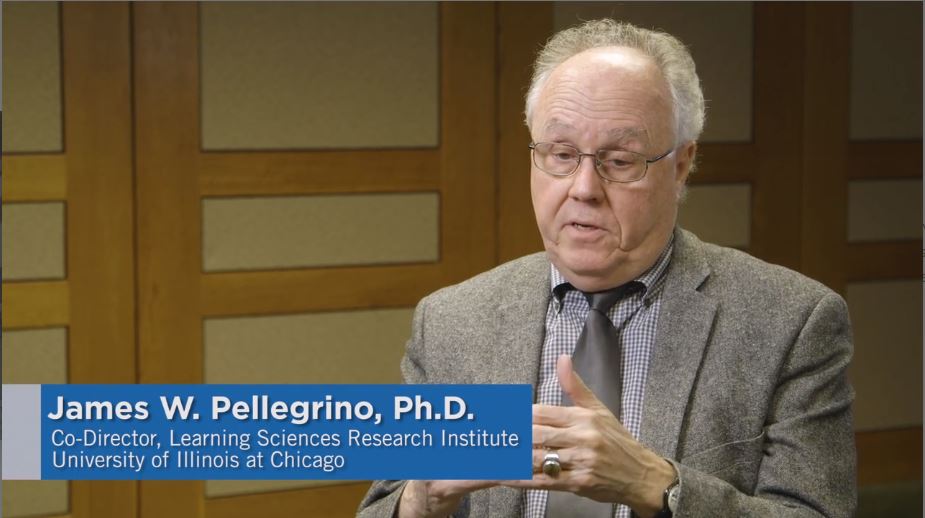
A Learning Moment Video
In this five-minute video, James Pellegrino describes what it would take for states and districts to implement coherent and balanced assessment systems.
Educational leaders producing a vision for assessment that is fair and that will help improve the quality of education in the U.S.
To learn more about our Policy and Practice work, please contact Kathy Dewsbury-White at (517) 816-4520.
Our resource bank contains additional materials and resources to support educators in the effective use of assessment.